

Authoritarianism in Plain Clothes
And What Organization Development Forgot How to Name


I have been a successful organization development consultant.
I’ve helped leaders improve performance, guided teams through difficult conversations, and designed participative processes that appeared—at least on the surface—to increase voice and engagement. I was trusted. I was invited back. By most measures, it worked.
And yet, over time, I began to notice something disturbing.
Authoritarianism was increasing inside organizations—not loudly, not crudely, but efficiently and without apology. And the field that once knew how to surface and confront it was mostly managing around it.
Including me.
The New Authoritarianism Doesn’t Announce Itself
When we hear the word authoritarian, we tend to imagine overt control: commands, threats, suppression. But that’s not how power usually operates in contemporary organizations.
Today’s authoritarianism wears professional language:
“Strategic alignment”
“Non-negotiable decisions”
“This has already been decided”
“We’re moving forward regardless”
It shows up as:
Decisions made upstream and presented downstream as consultation
Dialogue without consequence
Participation bounded so tightly it cannot affect outcomes
Psychological safety that excludes dissent
No one needs to shout.
No one needs to punish openly.
Authority simply becomes unquestionable—and questioning it is reframed as naïve, disruptive, or “not understanding the business reality.”
This is authoritarianism with a calm voice and a PowerPoint deck.
Organization Development Knew This Pattern—Once
Organization Development did not originate as a set of neutral facilitation techniques. It emerged from a recognition that unchecked authority distorts learning and that systems cannot correct themselves without feedback from those inside them.
The early wager—articulated most clearly through the work of Kurt Lewin—was simple and radical:
If you want to understand a system, you must involve the people living inside it in studying and changing it.
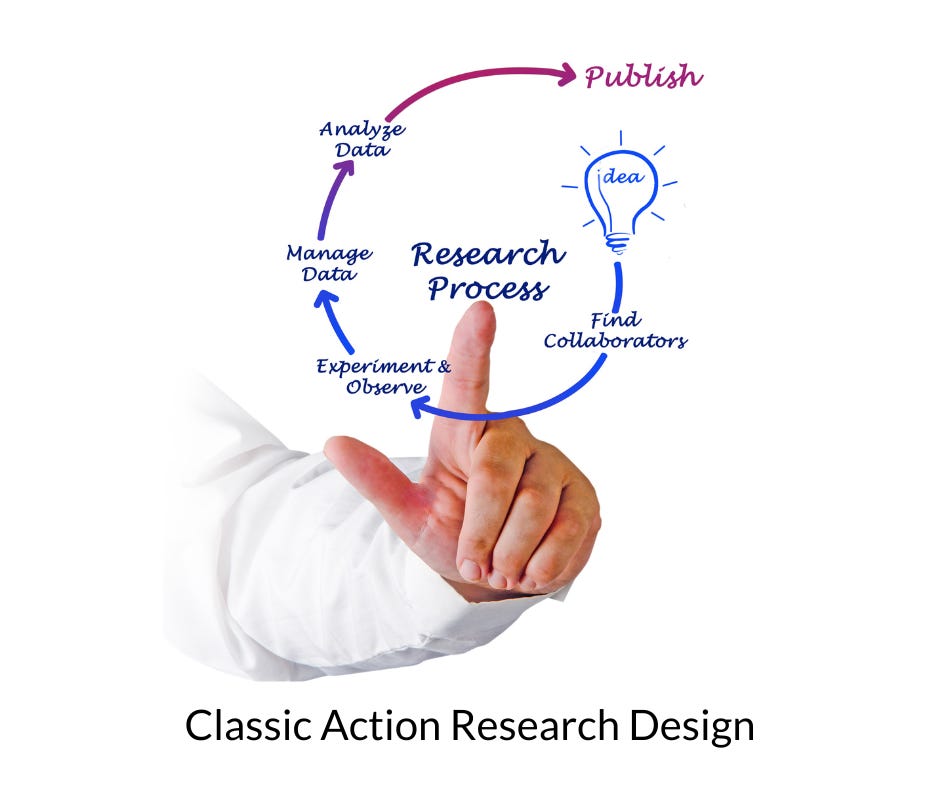
That was the promise of action research.
Not data collection for leaders, but inquiry with participants.
Not diagnosis handed down from experts, but shared investigation of what is actually happening—especially where power, fear, and silence are involved.
Action research was never meant to be comfortable. It was meant to surface what authority prefers not to see.
What Edgar Schein Tried to Save Us From
Later in OD’s evolution, Edgar Schein made a crucial—and often misunderstood—intervention.
In Humble Inquiry, Schein argued that real learning in organizations requires a particular posture: curiosity without control, questions without hidden agendas, and a willingness to be influenced by those with less formal authority.
This was not a call to be nice.
It was a warning.
Schein understood that when authority is strong, inquiry becomes performative. Questions get used to steer, diagnose, or extract information—rather than to learn. The consultant appears curious, but the system already knows where it is going.
Humble inquiry was Schein’s attempt to preserve something fragile: the ability to ask real questions in systems that subtly punish them.
Seen this way, Humble Inquiry is not a soft skill.
It is a counter-authoritarian discipline.
And like action research, it only works when the inquirer is willing to be changed by what they learn.
How OD Lost Its Leverage
Somewhere along the way, much of OD stopped doing that.
Instead of studying how authority operates, we began designing around it.
Instead of asking what could not be said, we focused on what could be safely discussed.
Instead of treating fear and resistance as data, we treated them as obstacles to be reduced.
Action research became:
Surveys without consequence
Feedback without ownership
Listening sessions without decision rights
Humble inquiry became:
Questions that sound open but lead somewhere predetermined (Statements)
Curiosity without vulnerability
Dialogue without the possibility of refusal
Participation remained, but inquiry stopped short of power.
The field didn’t abandon its values.
It domesticated them.
Why Consultants Don’t Push Harder
This isn’t hard to understand.
Authoritarian systems do not reward inquiry into their own authority. They reward effectiveness, speed, and compliance with strategic direction. Consultants who push too hard don’t get invited back. Those who translate discomfort into palatable language do.
So many of us learned—gradually and without explicit instruction—to:
Ask safer questions
Focus on culture instead of governance
Improve communication rather than decision rights
Treat authoritarian moves as constraints rather than data
This wasn’t cowardice.
It was adaptation.
But adaptation has consequences.
What Action Research Would Force Us to Confront
If organization development reclaimed action research in its original sense, it would force us to confront questions that many organizations—and many consultants—work hard to avoid.
Not just questions about them, but questions about us.
Action research would ask, plainly:
Where are decisions actually being made—and who is excluded from those conversations?
What information is systematically filtered, softened, or never surfaced at all?
What risks are unevenly distributed, and who absorbs the consequences of “strategic” decisions?
What topics, behaviors, or lines of inquiry quietly shorten contracts or end invitations?
And it would also turn the inquiry inward:
What questions do we, as practitioners, sense but choose not to ask?
What do we already know—but have learned to treat as “out of scope”?
Where have we substituted technique for courage?
At what point did we stop treating fear, silence, and compliance as data?
These are not abstract or rhetorical questions. They are diagnostic.
They reveal how authority operates, how consent is manufactured, and how participation is managed without power ever being redistributed.
Authoritarian systems do not fear dialogue.
They fear inquiry that includes the inquirer.
Lewin gave us the method.
Schein reminded us of the stance.
Both seem to be missing in practice today.
Reclaiming the Work
Reclaiming OD’s heritage today means being willing to name authoritarian dynamics even when they are legal, efficient, and profitable.
It means treating silence as data.
Treating fear as information.
Treating participation without authority as a design failure.
And it means returning action research and humble inquiry to their rightful place, not as techniques, but as disciplines of shared truth-telling in systems where truth is inconvenient.
Where I Stand Now
I no longer believe Organization Development can remain neutral in the face of rising organizational authoritarianism.
If we are not studying power with the people subject to it, we are helping normalize it.
If we are asking questions we already know the answers to, we are providing cover.
If we are managing around fear instead of inquiring into it, we are complicit.
Organization development once knew how to confront authority without becoming ideological—by insisting on inquiry, participation, and shared ownership of reality.
That capacity is still available to us. But only if we remember what action research and humble inquiry were actually for. Join the chat if you’re interested. I’d love to hear from you.
Thanks for articulating in a very interesting way what I experience in a range of organizations from my recreational organizations to government at all levels and nonprofits. The lack of reward for inquiry is pervasive and appalling. Good people are suffering as a result of this. I do worry about the field of consulting with talented professionals being dismissed.